
• sns01
  • sns02
  • sns03
  • sns05
  • sns06
  • sns07
0%

Table of Contents

Honestly, things are moving fast these days. Everyone's talking about miniaturization, right? Smaller, lighter, more efficient. But you spend enough time on sites, and you quickly realize that 'efficient' doesn't always mean 'easy to work with.' I've seen guys nearly break their backs trying to wrestle with these tiny components. Makes you wonder if all that engineering effort actually translates to savings on the ground.

Have you noticed everyone’s obsessed with thermal management? It’s all heat sinks and graphite sheets, but half the time, the real problem isn't the component itself, it’s the enclosure. Poor ventilation, direct sunlight… simple stuff. You'd think engineers would spend more time thinking about airflow, but… well, they don't always, do they?

It’s funny, we’re always chasing these new materials. Right now, it’s magnesium alloys. Light as a feather, surprisingly strong. But man, that dust… gets everywhere. And the smell when you machine it? Awful. Reminds me of burning metal, sort of acrid. We used a lot of aluminum – good old 6061 – reliable, easy to work with, smells… like nothing much, actually. And then there’s the plastics, of course. Polycarbonate's okay, but ABS… that stuff cracks if you look at it wrong.
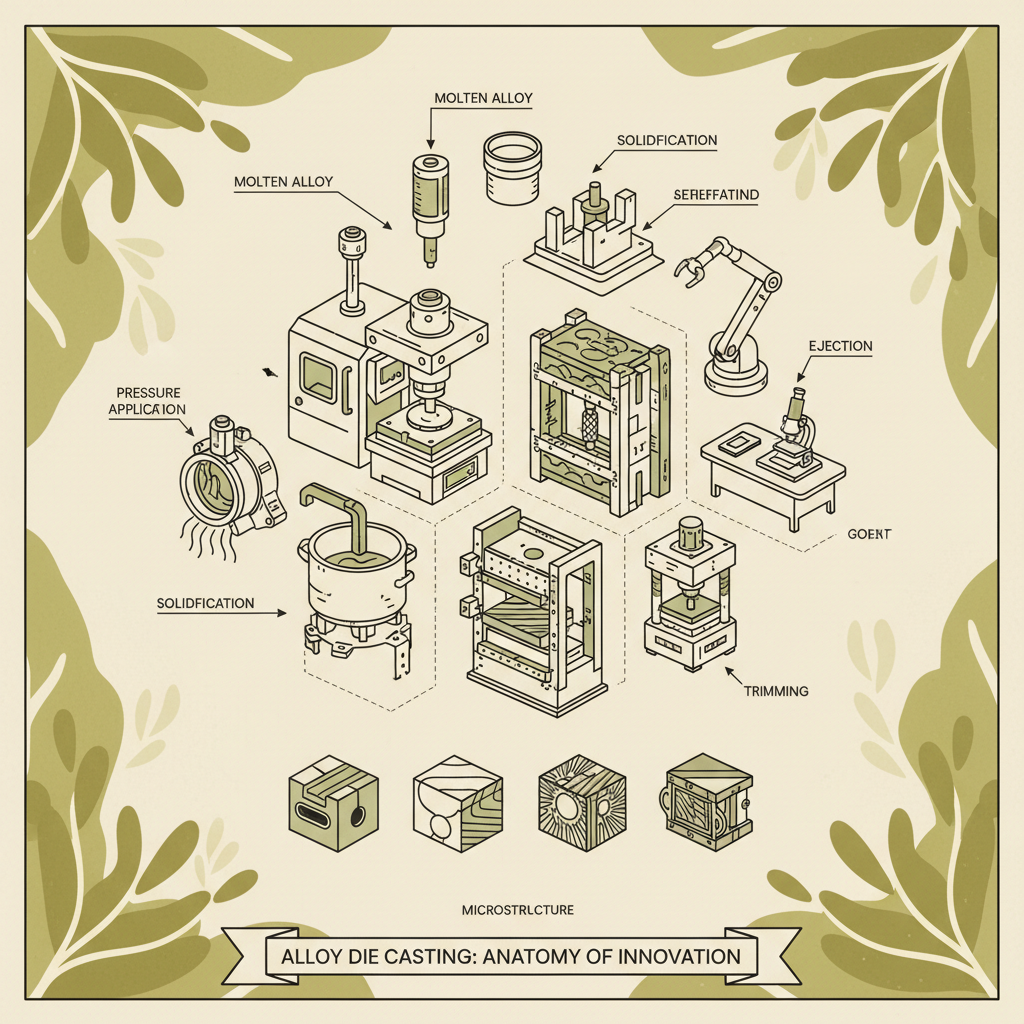

Expert Alloy Die Casting Manufacturer Navigating Modern Design Challenges

Current Trends and Design Pitfalls

Expert Alloy Die Casting Manufacturer Navigating Modern Design Challenges

To be honest, integrated designs are all the rage. Everything’s combined into one unit. Sounds great on paper, but when something breaks, you’re replacing the whole thing. I encountered this at a factory last time, they had a sensor built right into a complex housing. Simple leak? New housing. Strangely, they hadn't even considered modularity. Later… forget it, I won't mention it.

And don’t even get me started on snap fits. They look so neat in the CAD models, but try using them in a dusty, greasy environment? They become a nightmare. I swear, I spend half my life prying things apart with a screwdriver.

Material Selection: A Hands-On Perspective

We’ve been using a lot more high-strength aluminum alloys lately – 7075 is popular. It's seriously tough stuff, but machining it? It's a pain. The chips are like razors. You gotta be careful. And it's expensive. You can't just bang it around like regular aluminum.

Then there’s the composites – carbon fiber, fiberglass. Lightweight, strong, but brittle. And those fibers? They get everywhere when you cut them. Honestly, dealing with the mess is half the battle. It’s one of those things where the lab results look fantastic, but on the shop floor, it’s a different story.

And don’t underestimate good old steel. Properly treated, it can take a beating. It’s heavy, sure, but sometimes, you need that weight. It feels… solid. You know it’s going to last. It’s a good feeling.

Real-World Testing and Validation

Lab tests are fine, I guess. Drop tests, vibration tests, temperature cycles. But they don't tell the whole story. I prefer to see how things hold up in the actual environment. I once watched a housing fail after just a week in a salt spray chamber. Passed all the lab tests, but the real world… well, it’s harsher.

We started doing more field testing – sending prototypes out to customers, letting them use them in their applications. That's where you find the real problems. Like that time we discovered the coating was rubbing off on a robotic arm. Wouldn’t have found that in a lab.

And forget about simulated dirt and grime. Nothing beats real-world dirt. We've got a "dirt rig" – basically a sandblaster with different grades of grit. But it’s still not the same as the stuff you find on a construction site.

User Application: Expect the Unexpected

This is where things get really interesting. You design something to be used a certain way, but users always find new ways to use it – and sometimes, those ways are… creative. I once saw a guy using our housing as a hammer. A hammer.

It’s always the little things. How easily can they access the screws? Are the labels legible in low light? Is it comfortable to hold for extended periods? You don’t think about these things when you’re staring at a screen, but they matter. A lot.

Alloy Die Casting Manufacturer Performance Metrics


Advantages, Disadvantages, and Customization

Die casting is great for high-volume production. Fast, repeatable, good surface finish. But the tooling cost? Ouch. It can be a killer for small runs. And you’re limited by the die design. Complex geometries? Not always possible.

Customization is possible, of course. We did a project for a drone manufacturer who needed a housing with a specific mounting point for a camera. We had to modify the die, add a core pull… it added to the cost, but they needed it. Anyway, I think that’s the key – understand the trade-offs.

A Customer Story: The Debacle

Last month, that small boss in Shenzhen who makes smart home devices insisted on changing the interface to . Said it was “the future.” We warned him about the higher tooling cost, the potential for damage… he wouldn’t listen. He wanted it, he got it. Turns out, the connector was too fragile for his application. Users were breaking them left and right. He had to recall the entire batch. Expensive lesson learned.

He came crawling back, of course, asking for a redesign with a more robust connector. We told him, “We told you so.” But we fixed it. That's what we do.

It's a classic case of wanting the latest tech without considering the practical implications. Always happens.

Key Considerations for Alloy Die Casting Manufacturer Selection

Alloy Composition Tooling Complexity Production Volume Surface Finish
Aluminum A380 Low-Medium 500-5000 Units Excellent
Zinc ZAMAK-5 Medium 1000-10000 Units Very Good
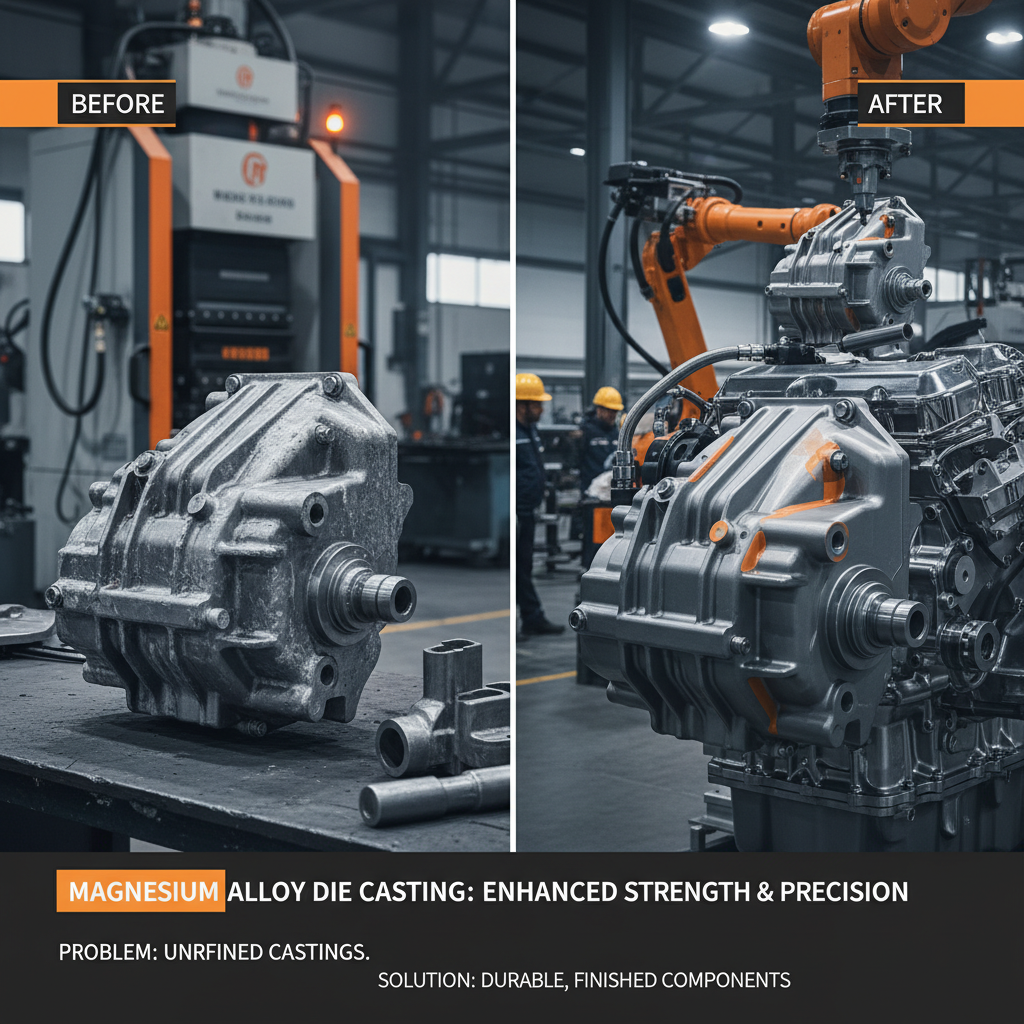
Magnesium AZ91D Medium-High 200-2000 Units Good
Aluminum ADC12 Low 2000-8000 Units Good
Zinc ZA-8 High 500-3000 Units Excellent
Magnesium AM60B Medium-High 100-1000 Units Very Good

FAQS

What are the key factors influencing the cost of alloy die casting?

Several elements contribute to the final cost: the alloy selected (some are inherently more expensive), the complexity of the part's design (more intricate designs require more complex tooling), the production volume (higher volumes distribute tooling costs), and the finishing requirements (surface treatments add to the expense). The size of the part also matters – larger parts require bigger machines and more material.

How does alloy die casting compare to other casting methods like sand casting or investment casting?

Die casting excels in high-volume production due to its speed and precision. Sand casting is better for larger, simpler parts and lower volumes. Investment casting provides superior accuracy and surface finish, but it’s more expensive and slower. Each method has its strengths and weaknesses, making the right choice dependent on the specific application's needs.

What are the typical lead times for alloy die casting tooling and production?

Tooling lead times typically range from 4 to 12 weeks, depending on the complexity of the die. Production lead times vary based on the order volume and our current workload, but we generally aim for 2-6 weeks after tooling completion. It's always best to plan ahead, especially for larger projects.

What surface finishes are available for alloy die casting parts?

We offer a wide range of surface finishes, including powder coating, painting, anodizing, plating (chrome, nickel, zinc), and polishing. The best finish depends on the desired appearance, corrosion resistance, and functional requirements of the part. We can advise on the most appropriate option for your application.

What are the common defects encountered in alloy die casting and how are they addressed?

Common defects include porosity, cracks, and dimensional inaccuracies. Porosity is often addressed by optimizing casting parameters like injection speed and temperature. Cracks can be prevented through proper die design and alloy selection. Dimensional inaccuracies are typically corrected through die adjustments and process control. We implement rigorous quality control procedures to minimize these issues.

Can you work with custom alloys or require specific material certifications?

Yes, we can work with custom alloys based on your specific requirements. We also provide full material certifications to ensure traceability and compliance with industry standards. We prioritize quality and transparency, and we're happy to accommodate special requests.

Conclusion

Ultimately, alloy die casting is a fantastic process for producing complex, high-quality parts in large volumes. It’s not perfect – there are challenges, trade-offs, and things will go wrong. But when done right, it’s incredibly efficient and cost-effective.

But here's the thing: all the fancy engineering, all the expensive tooling, all the material science… it doesn’t matter if the worker tightening the screw doesn't feel confident in the part. Ultimately, whether this thing works or not, the worker will know the moment he tightens the screw.

David Miller

David Miller

David Miller is a seasoned Mechanical Engineer with Baoding Hairun Machinery Equipment Trading Co., Ltd., specializing in cast steel and alloy steel components. With over 15 years of experience in the machinery industry, David focuses on bridging the gap between customer specifications and our manufacturing capabilities. He's a key contact
Previous Leading Gravity Die Casting Manufacturers for High Quality Metal Components
Next Expert Zinc Alloy Die Casting Parts Manufacturers for Precision Components