Understanding the optimal aluminum die casting wall thickness is a cornerstone of successful industrial design, directly impacting the structural integrity and production viability of metal components. In an era where lightweighting is paramount for fuel efficiency and performance, achieving the perfect balance between a thin wall and mechanical strength is a complex engineering challenge.
Across the global manufacturing landscape, the precision of wall design determines whether a part will suffer from porosity, cold shuts, or shrinkage. By optimizing the thickness, manufacturers can significantly reduce material waste and cycle times, leading to a more sustainable and cost-effective production cycle that meets rigorous international quality standards.
Whether you are developing automotive housings, aerospace brackets, or consumer electronics chassis, the mastery of aluminum die casting wall thickness allows for the creation of complex geometries that do not compromise on durability. This guide explores the technical nuances and practical applications of wall thickness to help engineers maximize product lifecycle and performance.
Global Relevance of Aluminum Die Casting Wall Thickness
On a global scale, the push toward carbon neutrality has placed immense pressure on the automotive and aerospace sectors to reduce the weight of their components. Aluminum die casting wall thickness is the primary variable in this equation; by reducing the weight of a casting without sacrificing strength, manufacturers can directly lower CO2 emissions from vehicles and aircraft. ISO standards for quality management often emphasize the consistency of these dimensions to ensure safety in critical structural parts.
However, the challenge lies in the "thin-wall limit." As industries push for thinner profiles to save costs and weight, the risk of incomplete fills and structural fragility increases. This global tension between efficiency and reliability drives the continuous evolution of die casting machinery and alloy formulations, making the precise calculation of wall thickness a competitive advantage in the international market.
Technical Definitions and Industrial Meaning
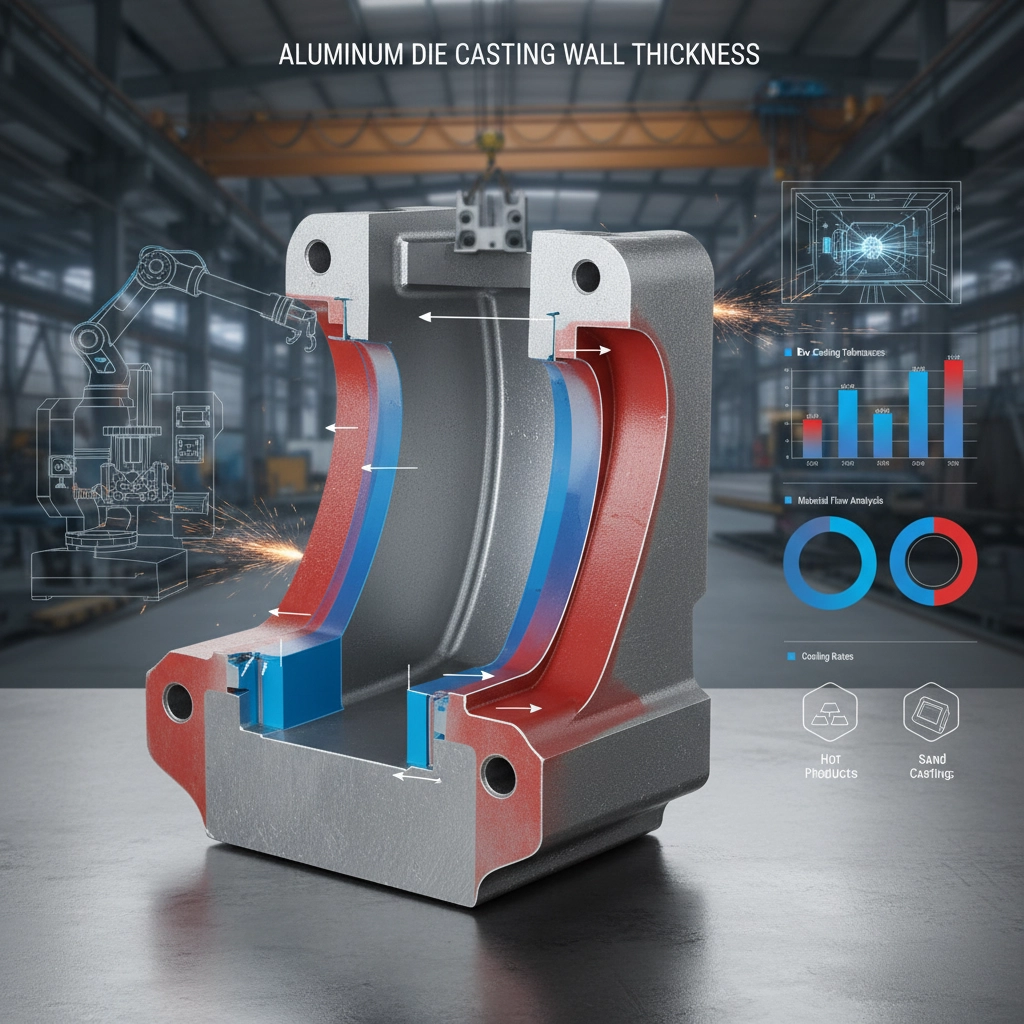
In simple technical terms, aluminum die casting wall thickness refers to the distance between the two opposing surfaces of a cast part's wall. It is not merely a measurement but a critical design parameter that dictates how the molten aluminum flows through the mold. A uniform wall thickness is generally preferred to ensure that the metal cools at an even rate, preventing internal stresses and warping.
From an industrial perspective, this measurement is the bridge between theoretical CAD design and physical reality. In modern high-pressure die casting (HPDC), the ability to maintain a consistent aluminum die casting wall thickness allows for the integration of complex features like cooling fins or internal ribs, which provide strength without adding unnecessary bulk.
Beyond the factory floor, this concept connects to broader humanitarian and economic needs. For example, in the production of affordable medical equipment or lightweight emergency housing components, optimizing wall thickness reduces the cost of raw materials, making essential technology more accessible to developing regions while maintaining the necessary durability for harsh environments.
Core Factors Influencing Wall Thickness Selection
Durability and structural integrity are the primary drivers when determining the aluminum die casting wall thickness. Engineers must analyze the expected loads the part will encounter; areas subject to high stress require thicker walls or reinforcing ribs to prevent deformation or fatigue failure over time.
Cost efficiency is inextricably linked to wall design. Thinner walls reduce the amount of aluminum required per part and speed up the cooling process, which shortens the production cycle. However, if the aluminum die casting wall thickness is too thin, the scrap rate increases due to casting defects, potentially offsetting the material savings.
Fluidity and casting scalability also play a role. The viscosity of the aluminum alloy and the injection pressure of the machine determine the minimum thickness that can be reliably cast. Ensuring that the wall thickness is optimized for the specific alloy used prevents "cold laps" and ensures a seamless surface finish across large production runs.
Practical Applications and Industry Use Cases
In the automotive sector, the application of precise aluminum die casting wall thickness is evident in engine blocks and transmission cases. By utilizing variable wall thicknesses—thicker in load-bearing areas and thinner in non-structural zones—engineers create components that are both lightweight and capable of withstanding extreme thermal and mechanical stress.
In the realm of consumer electronics, such as laptop frames or high-end camera bodies, the focus shifts toward aesthetic precision and extreme thinness. Here, advanced die casting techniques allow for incredibly slim walls that provide a premium feel and protect internal circuitry without adding bulk, showcasing the versatility of the process across different scales of industry.
Efficiency Ratings by Aluminum Die Casting Wall Thickness Method
Long-Term Value of Wall Optimization
The long-term value of optimizing aluminum die casting wall thickness extends far beyond initial cost savings. From a sustainability perspective, thinner walls mean less energy is required for smelting and transporting raw materials. This reduces the overall environmental footprint of the product, aligning the manufacturing process with global "Green Industry" initiatives and ESG (Environmental, Social, and Governance) goals.
Moreover, precision in wall thickness fosters trust and reliability. When a part is designed with an optimized thickness, it exhibits predictable behavior under stress, reducing the likelihood of catastrophic failure. This reliability translates into higher customer satisfaction and lower warranty costs for the manufacturer, creating a cycle of innovation and trust that strengthens the brand's position in the market.
Future Trends in Thin-Wall Casting Technology
The future of aluminum die casting is moving toward "ultra-thin" walls, driven by the integration of AI-powered simulation software. These tools allow engineers to predict the flow of molten metal with micron-level accuracy, enabling the design of wall thicknesses that were previously thought impossible. This digital transformation reduces the need for physical prototypes, accelerating the time-to-market for new products.
Another emerging trend is the use of semi-solid molding (SSM) and vacuum-assisted die casting. These technologies minimize air entrapment and shrinkage, allowing for even thinner walls while maintaining the structural integrity of a thicker casting. By controlling the phase of the aluminum, manufacturers can achieve a level of precision that pushes the boundaries of traditional die casting.
Furthermore, the shift toward electric vehicles (EVs) is catalyzing the development of large-scale "Giga-castings." In these massive components, managing the wall thickness across a huge surface area is critical to preventing warping. The innovation in thermal management within the molds ensures that even the most ambitious wall designs can be executed with consistency.
Challenges and Expert Solutions for Wall Thickness
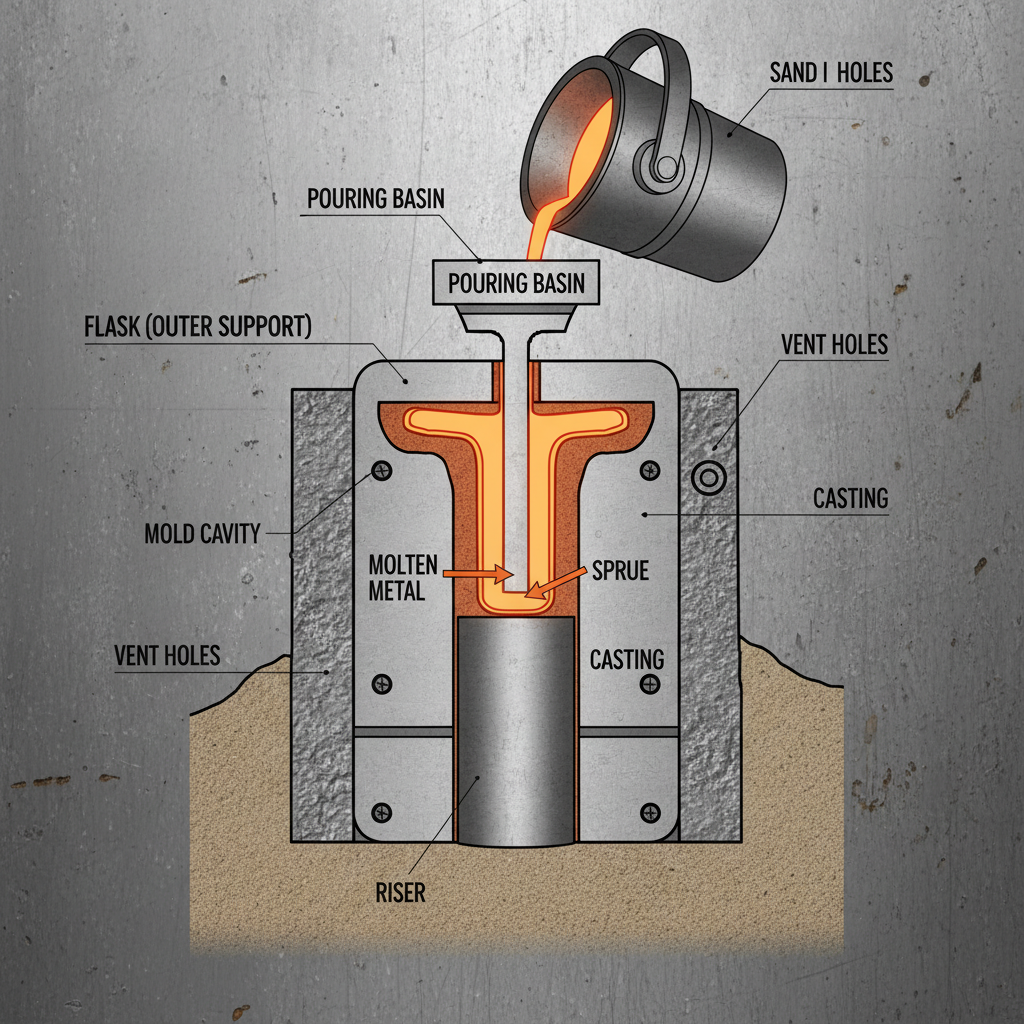
One of the most common challenges is "gas porosity," which often occurs in thicker sections of a part where the metal cools more slowly. This can lead to internal voids that weaken the structure. Expert solutions involve the implementation of strategic gating and venting systems that force air out of the mold before the metal fills the cavity, ensuring a dense, void-free wall.
Another hurdle is the "cold shut," where two streams of molten metal meet but fail to fuse completely due to premature cooling in very thin walls. To overcome this, engineers often increase the die temperature or optimize the injection speed. By maintaining a higher thermal energy in the mold, the aluminum die casting wall thickness can be reduced without risking incomplete fusion.
Finally, achieving consistency across high-volume production remains a struggle. The solution lies in real-time monitoring and automated feedback loops. By using sensors to track pressure and temperature within the die, manufacturers can make micro-adjustments to the process on the fly, ensuring every single part adheres to the specified wall thickness tolerances.
Analysis of Wall Thickness Impact on Casting Quality
| Wall Thickness Category |
Common Defect Risk |
Cooling Rate |
Structural Strength |
| Ultra-Thin (
|
Cold Shuts / Misruns |
Very Fast |
Low (Requires Ribs) |
| Thin (2mm - 3.5mm) |
Surface Porosity |
Fast |
Moderate |
| Standard (3.5mm - 6mm) |
Minimal Risk |
Balanced |
High |
| Thick (6mm - 10mm) |
Shrinkage Porosity |
Slow |
Very High |
| Heavy (> 10mm) |
Internal Voids |
Very Slow |
Maximum |
| Variable/Hybrid |
Warping / Stress |
Uneven |
Optimized |
FAQS
While it depends on the alloy and machine, the general minimum is around 2.0mm to 2.5mm. However, with high-pressure die casting and vacuum assistance, some advanced manufacturers can achieve walls as thin as 1.2mm to 1.5mm. Pushing below this limit significantly increases the risk of "cold shuts," where the metal solidifies before completely filling the mold cavity.
Wall thickness affects cost in three main ways: material volume, cycle time, and scrap rates. Thinner walls use less aluminum and cool faster, reducing the cost per piece. However, if walls are too thin, the scrap rate increases due to defects. The goal is to find the "sweet spot" where material usage is minimized without compromising the yield rate.
Yes, adding ribs is a standard industry practice to maintain strength while keeping the overall wall thickness thin. Ribs provide structural rigidity and prevent bending or warping. The key is to ensure the rib thickness is roughly 50-70% of the main wall thickness to avoid creating "hot spots" that lead to shrinkage porosity during cooling.
Uneven wall thickness leads to differential cooling rates. Thinner sections solidify quickly, while thicker sections remain molten longer, which can cause internal stresses, warping, or "sink marks" on the surface. To prevent this, designers use gradual transitions (tapers) between thick and thin sections to ensure a smooth flow of metal and uniform cooling.
The choice depends on the part's function. If the part is a structural bracket subject to high impact or pressure, a thicker wall or a reinforced thin-wall design is necessary. If the part is a housing for electronics where weight and space are critical, a thin-wall design is preferred. Always conduct a FEA (Finite Element Analysis) to verify that the chosen thickness meets safety requirements.
Absolutely. Alloys with better fluidity (the ability to flow easily when molten) allow for thinner walls. For instance, some eutectic alloys are specifically designed for thin-wall applications because they have a lower melting point and higher fluidity, making them less likely to freeze prematurely in narrow mold channels.
Conclusion
Optimizing aluminum die casting wall thickness is a delicate balancing act between material efficiency, structural integrity, and manufacturing feasibility. By understanding the relationship between cooling rates, alloy fluidity, and mechanical stress, engineers can produce components that are not only lightweight and cost-effective but also exceptionally durable. The integration of modern simulation tools and advanced casting techniques has turned wall thickness from a limitation into a strategic tool for innovation.
As the global industry shifts toward a more sustainable and digitally-driven future, the ability to precision-engineer thin-wall castings will remain a key driver of competitiveness. We recommend collaborating with experienced casting partners who can provide the technical insight needed to push the boundaries of your design. For professional guidance and high-precision casting solutions, visit our website: www.hairunsourcing.com.