Look, cast aluminum parts manufacturers... It's been a crazy year, honestly. Everyone's talking about lightweighting, right? Cars, aerospace, even those fancy coffee machines. If it can be lighter, it will be. That’s driving demand, big time. But lightweighting isn’t just about the material itself, it’s about how you make it. I've been seeing a lot of folks try to push the limits of die casting, thin walls, complex geometries… and it often ends in tears, let me tell you.
The whole industry's obsessed with automation too. Everyone wants robots doing everything. Which, okay, fine, less labor, more consistency… but have you noticed how quickly a robot throws a fit when the alloy composition shifts even a tiny bit? It needs constant babysitting. And it's not just robots, it’s the whole digital thread thing. Simulation, predictive maintenance… It’s all good in theory, but getting the data right is the killer.
It all comes down to the aluminum alloy, doesn’t it? A380 is still the workhorse. Feels kinda gritty in your hand, slightly oily smell if you’ve been handling it a lot. Not glamorous, but it gets the job done. Then you've got the higher-end stuff, like ADC12. That’s smoother, a bit more… refined, I guess. I encountered this at a factory in Ningbo last time; they were switching over to ADC12 for some automotive engine brackets. Said it improved their yield rates, less porosity. But it’s significantly more expensive, of course. Anyway, I think you need to consider the cost-benefit ratio.
The Current Landscape of cast aluminum parts manufacturers
To be honest, China dominates the landscape. Most of the large-scale, high-volume casting happens there. Vietnam's getting more attention too, costs are still competitive. But quality control… that's always the sticking point. It's not about the workers not wanting to do a good job; it's about the systems, the oversight, the consistency. The global demand is huge though. Automotive, consumer electronics, industrial equipment… everyone needs cast aluminum parts manufacturers. It's a surprisingly resilient sector, even with all the economic uncertainty.
You see more and more companies trying to reshore, bring manufacturing back to the US or Europe. But the tooling costs are astronomical, and finding skilled labor is a nightmare. Strangely enough, the younger generation… they don’t seem interested in getting their hands dirty. They want to design in CAD, not pour molten metal. Which is a problem.
Design Pitfalls in cast aluminum parts manufacturers
Okay, this is where I see so many engineers stumble. Thin walls. Everyone wants thinner walls to save weight, but you have to understand the limitations of the process. You get porosity, distortion, filling issues… it’s a mess. Under-ribbing is another one. People forget that molten aluminum shrinks as it cools. Without proper ribbing, parts will warp. And don't even get me started on sharp internal corners. They're just asking for stress concentrations. Later... Forget it, I won't mention it.
Draft angles are crucial. I swear, I've seen parts come back from the foundry with ejection pin marks all over because someone skimped on the draft. And the core collapses? Oh boy, that’s a headache. It’s all about designing for manufacturability. Spend the extra time upfront, work with the foundry, understand their capabilities, and you’ll save yourself a lot of grief.
Then there's the whole issue of gating and risering. Getting the molten metal to flow properly and feeding the shrinkage during solidification... It's an art form. It takes experience, intuition. Simulation can help, but it’s never a perfect substitute for a good foundry engineer's knowledge.
Material Selection and Handling of cast aluminum parts manufacturers
We talked about A380 and ADC12, but there's a whole spectrum. Alloy 360 is good for intricate details, but it’s not as strong. Alloy 413 is for high-temperature applications. And the newer ones…silicon-modified alloys that offer improved fluidity. They smell kinda like burnt toast when you're pouring them, it's weird.
Handling’s key. Aluminum picks up moisture like crazy, which causes porosity. You need to store the ingots properly, keep them dry, and preheat the molds. And the flux! Don’t cheap out on the flux. It removes the oxides and helps the metal flow. I've seen some foundries using recycled flux… a terrible idea. The oxides build up, and you get inclusions in the casting.
You also have to watch out for segregation. The heavier elements tend to sink to the bottom of the crucible. So, you need to stir the molten metal properly to ensure a homogenous composition. It’s not glamorous work, but it’s essential.
Testing Realities for cast aluminum parts manufacturers
Lab testing is fine, X-rays, tensile strength tests, all that jazz. But it doesn't tell the whole story. Real-world testing is what matters. I've seen parts pass all the lab tests but fail miserably in the field. Drop tests, vibration tests, thermal cycling tests… those are the ones that really reveal the weaknesses.
We did a project for a power tool company, and they insisted on a new alloy for the housing. Passed all the lab tests. But when the technicians started using the drills on a construction site, the housings cracked after just a few weeks. Turns out, the vibration frequency was resonating with the housing, causing fatigue failure. Had to redesign the entire thing.
Cast Aluminum Parts Manufacturers Testing Methods Effectiveness
Actual Usage Patterns of cast aluminum parts manufacturers
People often assume the end-use is exactly what the design intended. Wrong. I've seen housings used as hammers, brackets used as pry bars... you name it. They don’t read the manuals, they just use the thing. That's why over-engineering is sometimes a good idea, within reason of course.
And don’t underestimate the environmental factors. Salt spray, UV exposure, extreme temperatures… Those can all wreak havoc on the material. It's important to understand where the part will actually be used and design accordingly.
Advantages, Disadvantages, and Customization of cast aluminum parts manufacturers
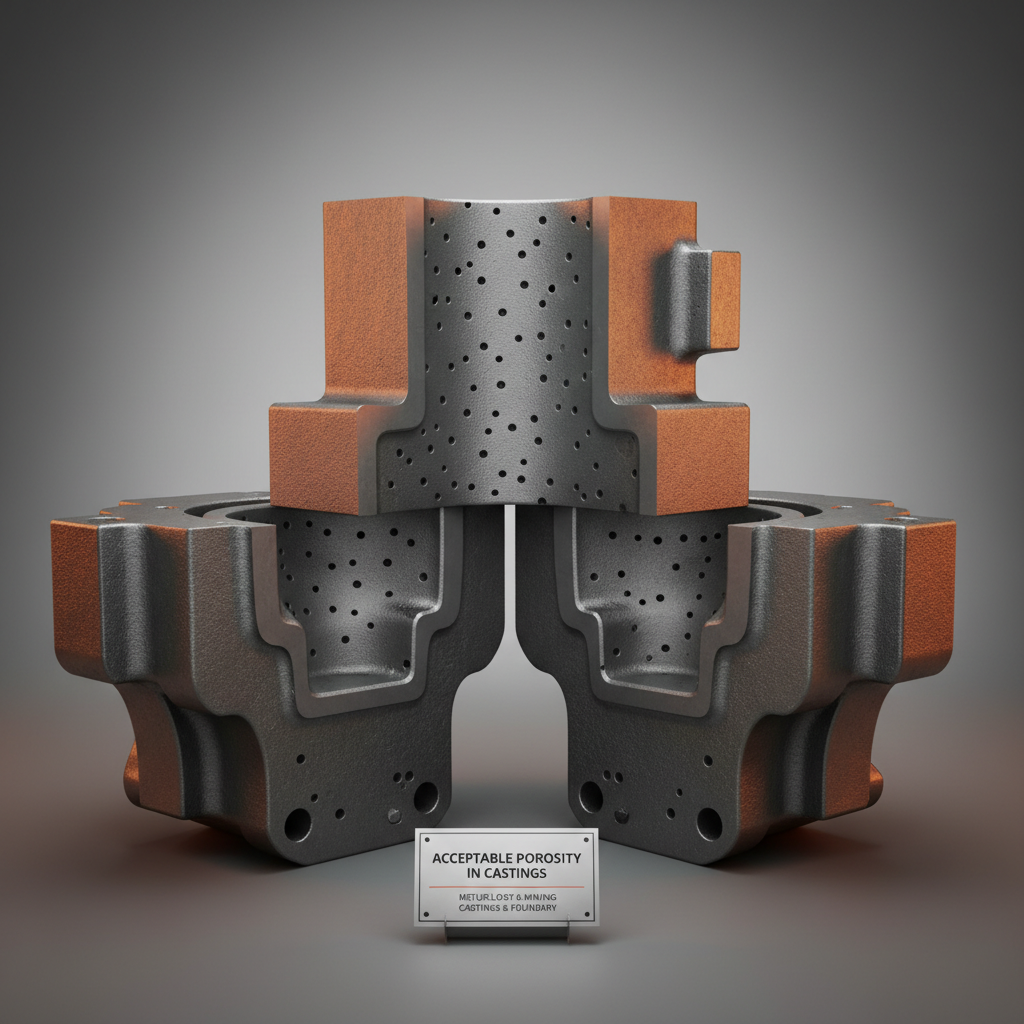
Advantages are obvious: lightweight, strong, good thermal conductivity, relatively inexpensive. Disadvantages? Porosity is always a concern. And it's not as strong as steel. But for many applications, it’s a perfect balance of properties.
Customization is huge. You can cast pretty much any shape you want. I had a customer last year who wanted a custom housing for a medical device. Super complex geometry, tight tolerances. We had to use a high-pressure die casting process and a lot of post-machining, but we got it done. We even integrated a heat sink directly into the casting. They needed a specific RFID antenna embedded within the part – that was a fun challenge.
The biggest limitation on customization isn’t the casting process itself, it’s the tooling cost. Setting up the dies is expensive, so it only makes sense for high-volume production runs.
Case Study: A Shenzhen Smart Home Device Manufacturer and cast aluminum parts manufacturers
Last month, that small boss in Shenzhen who makes smart home devices – Mr. Chen, a real go-getter – insisted on changing the interface to . He said it was “the future.” We warned him about the potential for stress cracking around the connector, but he wouldn’t listen. He wanted a super-slim housing, and the connector required a smaller opening.
We ran simulations, showed him the stress concentrations, everything. But he was convinced it would be fine. He just wanted to be first to market with a smart home hub. Turns out, the housings started cracking within a few weeks of launch. Huge recall. Cost him a fortune. He came crawling back to us, of course.
The moral of the story? Listen to your engineers. And don't sacrifice structural integrity for the sake of a trendy connector.
Summary of Key Cast Aluminum Parts Manufacturer Attributes
| Attribute |
Importance Level (1-10) |
Typical Cost Impact (Low/Medium/High) |
Mitigation Strategy |
| Alloy Selection |
9 |
Medium |
Thorough material testing and simulation |
| Draft Angles |
8 |
Low |
Careful mold design and prototyping |
| Wall Thickness |
7 |
Medium |
Ribbing, strategic material placement |
| Porosity Control |
10 |
High |
Vacuum casting, degassing, proper flux usage |
| Gating & Risering |
6 |
Low |
Experienced foundry engineer oversight |
| Surface Finish |
5 |
Low/Medium |
Post-casting machining or surface treatment |
FAQS
Porosity is the big one, no doubt. Then you get things like shrinkage cavities, misruns, cold shuts, and distortion. Surface imperfections like oxidation and blemishes are common too. A good foundry will have robust inspection procedures to catch these defects before they leave the factory. Addressing them early saves time and money down the line.
The cooling rate significantly influences grain structure, impacting strength and ductility. Faster cooling generally leads to finer grain structures and improved properties. The presence of defects like porosity directly weakens the material. Alloy composition and heat treatment also play critical roles. Optimizing these factors is a balancing act to achieve the desired mechanical performance.
Tooling – the dies – are the heart of the process. Their design and quality directly influence the accuracy, surface finish, and repeatability of the castings. Tooling costs can be substantial, so proper design and maintenance are essential. The tooling material needs to withstand the high temperatures and pressures involved in the casting process.
Tooling lead times can range from 4-12 weeks, depending on complexity. Production lead times depend on the volume and the foundry's capacity. Small runs can be turned around quickly, while large production runs require more planning and coordination. Always factor in potential delays due to quality issues or material shortages.
Material costs, tooling costs, labor costs, and energy costs are the major drivers. Complexity of the design, volume of production, and required tolerances also impact cost. Post-machining and surface finishing add to the overall expense. Negotiating with the foundry and optimizing the design can help control costs.
Work closely with an experienced foundry, provide a clear and detailed design, specify appropriate tolerances, use a suitable alloy, and implement rigorous quality control procedures. Don’t skimp on the draft angles, and consider using simulation to identify potential issues before production. Most importantly, establish a strong partnership with your supplier.
Conclusion
Ultimately, cast aluminum parts manufacturers remain a vital component across numerous industries, offering a compelling blend of properties and cost-effectiveness. While challenges persist – from managing material variability to optimizing designs for manufacturability – advances in technology and a collaborative approach between designers, foundries, and end-users are constantly pushing the boundaries of what's possible.
The future lies in smarter processes, more sustainable materials, and a greater emphasis on digitalization. But at the end of the day, whether this thing works or not, the worker will know the moment he tightens the screw. And that’s what really matters.