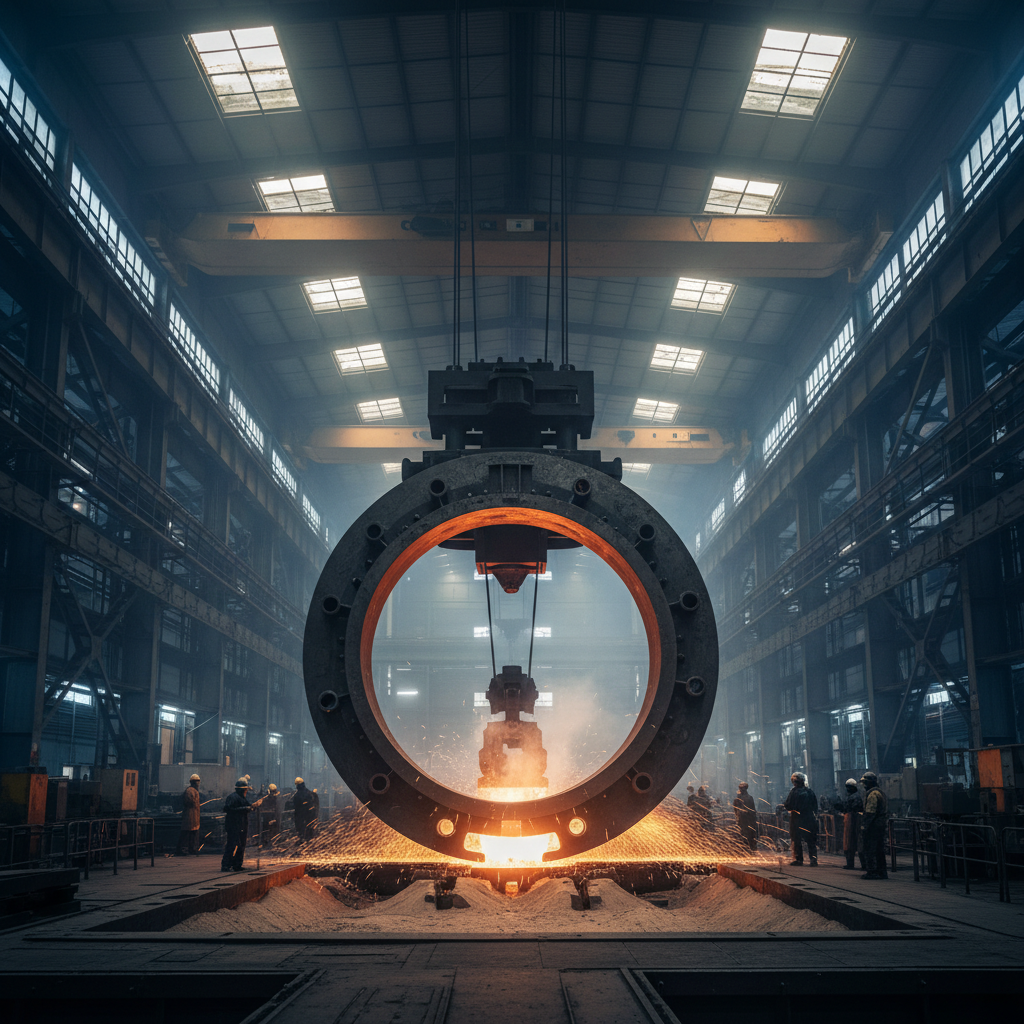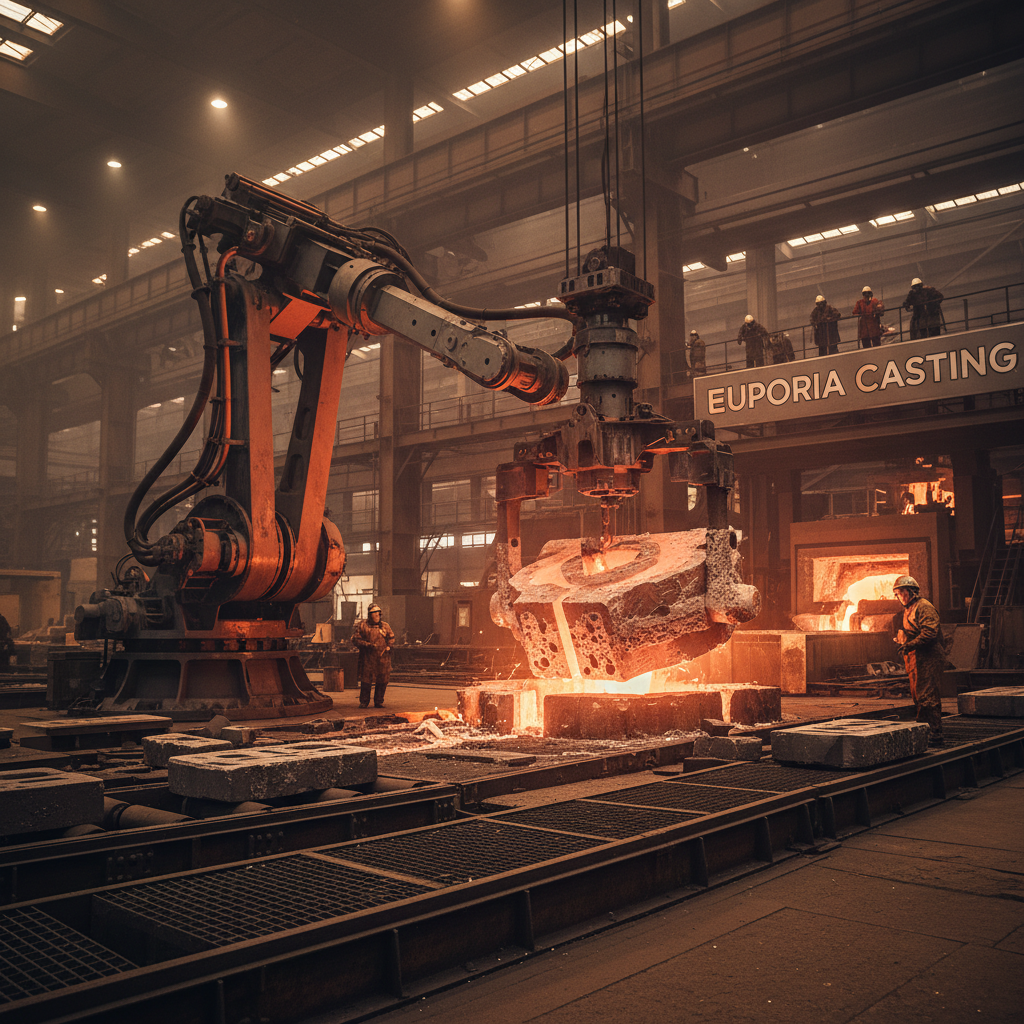



Selecting a reliable precision casting company is often the deciding factor between a prototype that merely functions and a production component that excels in high-stress industrial environments. For procurement managers in the machinery and aerospace sectors, the challenge lies in balancing tight dimensional tolerances with material integrity and scalable cost structures.
Modern casting requirements have evolved beyond simple shapes; they now demand complex internal geometries and superior surface finishes that reduce the need for extensive secondary machining. This shift has placed a premium on companies that can integrate advanced metallurgy with precise process control.
By understanding the interplay between material selection—ranging from stainless steel to titanium—and the specific casting process, businesses can significantly optimize their supply chain efficiency and product lifespan. This guide examines the critical evaluation metrics for sourcing high-precision cast components.

Defining Technical Excellence in Precision Casting Standards

Precision casting is not a single method but a discipline of achieving near-net-shape components that minimize waste and maximize structural performance. At its core, it involves the creation of a highly accurate mold—often through investment casting—to produce parts that require minimal post-processing.
The standard of excellence is measured by a company's ability to maintain consistency across bulk production. This involves rigorous control over the wax pattern, the ceramic shell's stability, and the precise temperature of the molten metal during the pour to prevent shrinkage or porosity.
For a professional precision casting company, the goal is to eliminate the variance between the CAD drawing and the physical part. This requires a symbiotic relationship between experienced casting engineers and high-precision CNC machining capabilities for final critical dimensions.
Critical Material Capabilities for Industrial Casting Applications
The versatility of a casting partner is defined by their material palette. While standard steels are common, high-performance industries require expertise in alloy steels, nickel, titanium, and non-ferrous metals like copper and aluminum.
Specialized materials such as titanium are essential for aerospace applications due to their strength-to-weight ratio, whereas ductile iron and gray cast iron remain the gold standard for heavy machinery and pump housings due to their vibration-damping properties.
Beyond metals, the integration of non-metallic materials like PTFE or fiberglass boards in specific coupling applications demonstrates a holistic approach to component design, ensuring that the casting works in harmony with seals and insulators.
Strategic Integration of Precision Castings Across Core Industries
Precision cast components serve as the skeletal structure for various complex systems. In the pipeline and pump industry, the ability to cast intricate internal flow paths reduces turbulence and increases energy efficiency in fluid transport.
Within the automotive and aircraft sectors, precision casting is used to create lightweight engine parts and structural brackets that must withstand extreme thermal cycling and mechanical vibration without developing stress fractures.
Moreover, the construction machinery and food machinery industries rely on these parts for their durability and hygienic properties—particularly when using stainless steel precision castings that resist oxidation and chemical corrosion.
Comparing Dimensional Accuracy and Surface Finish Benchmarks
When evaluating the performance of a casting process, engineers look at the reduction of "machining allowance." A high-quality precision casting company can produce parts so close to the final spec that only critical mating surfaces require CNC milling.
The following data illustrates the typical efficiency gains when shifting from traditional sand casting to advanced precision casting methods across five key technical dimensions.
precision casting company Performance Metrics
As shown, the significant increase in surface smoothness and dimensional stability directly correlates to a reduction in total lead time, as fewer secondary operations are needed before the part is ready for assembly.
Procurement Framework for Evaluating Casting Supplier Quality
Procuring cast parts requires more than a price comparison; it requires a technical audit of the supplier's quality control chain. A trustworthy partner should provide a comprehensive inspection report for every batch.
Essential documentation includes chemical composition reports to verify alloy grade, tensile strength and hardness tests to ensure mechanical properties, and non-destructive testing (NDT) such as X-ray, Ultrasonic, or Magnetic Particle tests for internal defect detection.
Furthermore, the ability of a supplier to provide end-to-end support—from drawing analysis and trial production to customs clearance and logistics—reduces the operational risk for international buyers.
Future Trajectories in Metallurgy and Casting Automation
The casting industry is moving toward a hybrid model where traditional expertise meets digital precision. The adoption of 3D-printed wax patterns is likely to reduce the cost of tooling for low-volume, highly complex parts.
We can expect an increase in the use of specialized alloys designed for extreme environments, potentially integrating nano-materials to enhance wear resistance and thermal stability in turbine and aircraft components.
Automation in the shell-building and pouring processes is expected to further reduce human error, leading to even tighter tolerances and a more predictable production cycle across large-scale industrial orders.
Selection Matrix for Different Casting Process Methodologies
Choosing the right casting process depends on the required precision, the volume of production, and the budget. Not all "precision" needs are the same, and the trade-off between cost and tolerance is key.
The following matrix compares the most common processes used by a versatile precision casting company to help procurement officers match the technology to the application.
| Process Type | Typical Tolerance | Best Use Case | Surface Quality |
|---|---|---|---|
| Investment Casting | ±0.1mm to ±0.3mm | Aerospace & Medical | Excellent |
| Die Casting | ±0.05mm to ±0.2mm | Auto Parts (Al/Zn) | Very High |
| Sand Casting | ±0.5mm to ±2.0mm | Heavy Engine Blocks | Rough/Coarse |
| Stamping Parts | ±0.01mm to ±0.1mm | Thin Sheet Metal | Smooth |
| Silicon Melt | ±0.2mm to ±0.5mm | High-Precision Tooling | High |
| Centrifugal | ±0.5mm to ±1.5mm | Cylindrical Pipes | Moderate |
While investment casting offers the highest detail, die casting is superior for high-volume production of non-ferrous metals. The decision should be based on the total cost of ownership, including the cost of the mold versus the cost of secondary machining.
Frequently Asked Questions
Conclusion
The success of any industrial project involving cast components depends on the technical synergy between the design requirements and the supplier's manufacturing capabilities. A professional precision casting company does more than pour metal; they provide an engineering solution that optimizes material use, reduces assembly time, and ensures long-term operational reliability.
For organizations seeking to upgrade their component quality or streamline their procurement, reviewing detailed technical capabilities and quality reports is essential. Those evaluating these options can review the relevant product and company information available through www.hairuncasting.com.