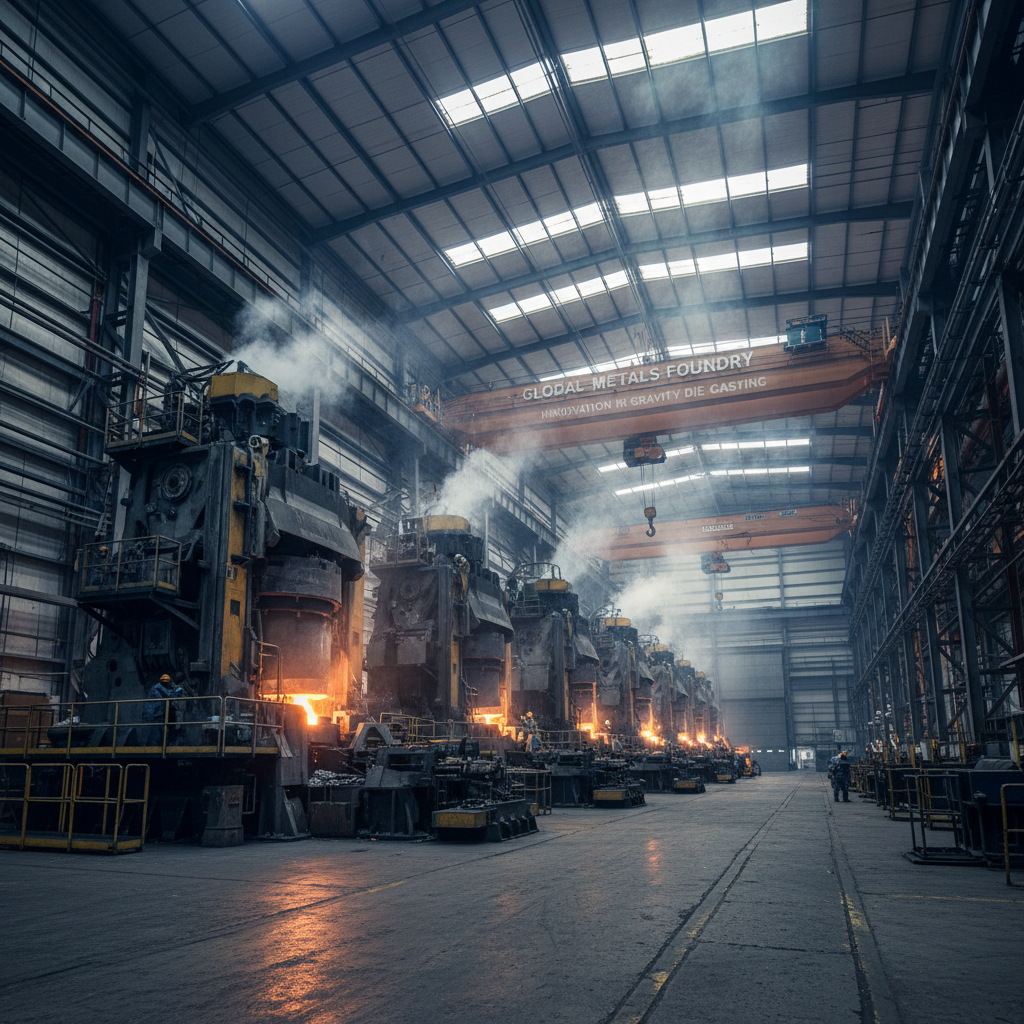
Pressure die casting is a metal casting process characterized by forcing molten metal under high pressure into a mold cavity. This process is pivotal across a multitude of industries, from automotive and aerospace to electronics and consumer goods, due to its ability to produce high-quality, dimensionally accurate parts efficiently. The global demand for pressure die casting components is driven by increasing manufacturing output, particularly in emerging economies, and a continued need for lightweight, durable materials. Understanding the different types of pressure die casting is crucial for engineers, designers, and manufacturers aiming to optimize their production processes and material choices.
The significance of pressure die casting lies in its capability to produce complex geometries with tight tolerances, making it ideal for intricate components. Globally, the pressure die casting market is experiencing substantial growth, estimated at over $60 billion USD in 2023 (source: Market Research Future). This growth is fueled by innovations in materials science, such as the use of magnesium and aluminum alloys, and the rising demand for fuel-efficient vehicles and lightweight consumer products. Addressing challenges in this sector, like reducing cycle times and improving energy efficiency, is paramount for maintaining competitive advantage.
Ultimately, expertise in different types of pressure die casting enables businesses to meet evolving customer needs, improve product performance, and contribute to more sustainable manufacturing practices. It is a cornerstone of modern industrial production.
Introduction to Types of Pressure Die Casting
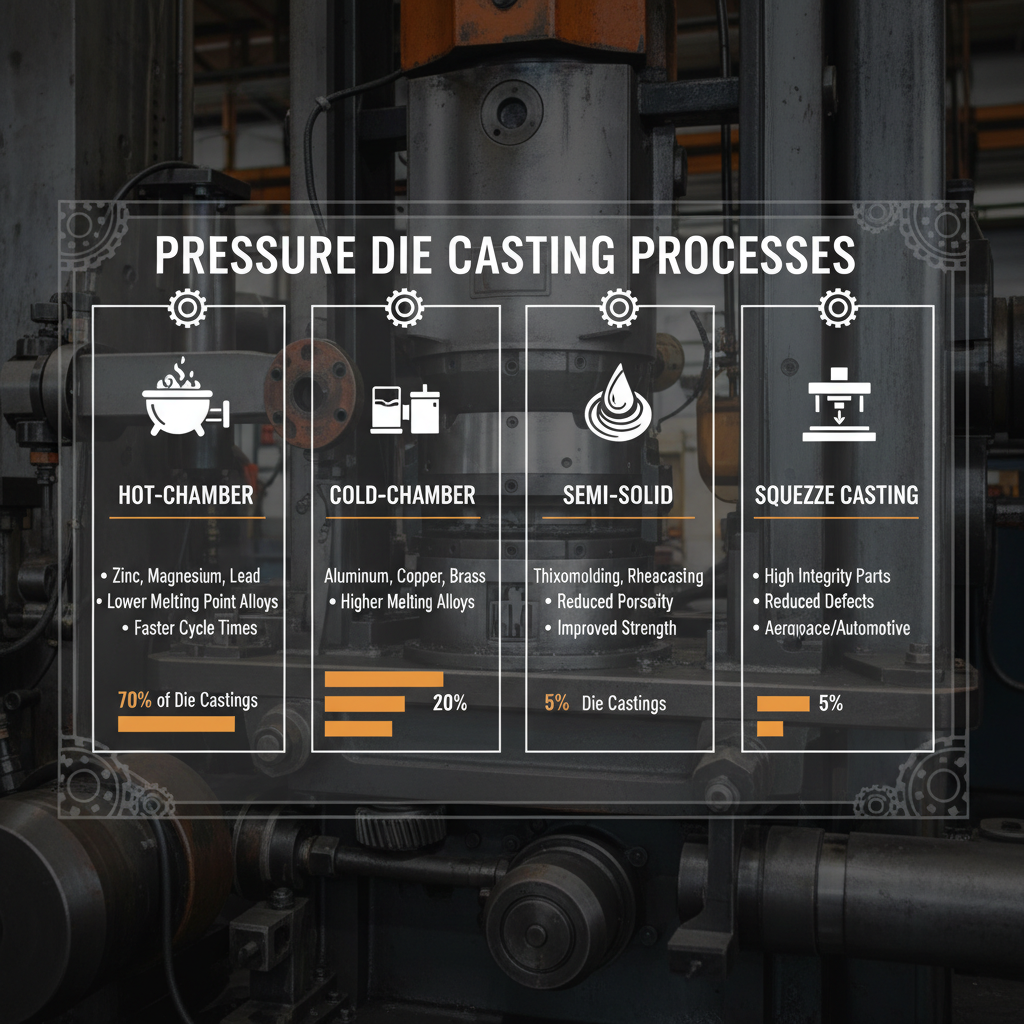
Pressure die casting encompasses several distinct methods, each suited to different production volumes, part complexities, and material requirements. The core principle remains consistent – injecting molten metal into a reusable mold under pressure – but variations in machine configuration, injection systems, and mold designs yield unique capabilities. These variations directly influence the final product’s quality, cost, and application suitability.
Understanding these types of pressure die casting is essential for informed decision-making. Selecting the optimal technique ensures efficient manufacturing, minimizes waste, and maximizes the potential for high-performance components. The categories include high-pressure die casting, low-pressure die casting, gravity die casting, and squeeze die casting, each offering a unique balance of advantages and disadvantages.
The Fundamentals of Pressure Die Casting
Pressure die casting, at its core, relies on a cyclical process. Molten metal, typically aluminum, zinc, magnesium, or copper alloys, is injected into a steel mold at high velocity and under significant pressure. This pressure ensures the metal fills every detail of the mold cavity, producing a highly accurate and repeatable casting. Once solidified, the casting is ejected, and the cycle repeats.
Key parameters influencing the process include injection speed, pressure, mold temperature, and metal temperature. Precise control of these variables is critical for minimizing defects like porosity, shrinkage, and distortion. Advanced control systems and real-time monitoring are increasingly employed to maintain optimal process parameters throughout production runs.
The choice of alloy significantly impacts the mechanical properties of the final casting. Different alloys offer varying levels of strength, ductility, corrosion resistance, and thermal conductivity, making material selection a critical step in the design process. Selecting the correct alloy for the application helps maximize part performance.
Key Characteristics of Different Types
Each type of pressure die casting possesses distinct characteristics that dictate its suitability for specific applications. High-pressure die casting, for instance, is renowned for its ability to produce complex parts with exceptional detail and dimensional accuracy, making it ideal for automotive and electronic components. This method excels in high-volume production.
Low-pressure die casting, conversely, offers improved metal fluidity and reduced porosity, resulting in castings with superior mechanical properties. It is well-suited for larger, more complex parts where structural integrity is paramount, such as engine blocks and transmission housings. This method typically caters to lower production volumes.
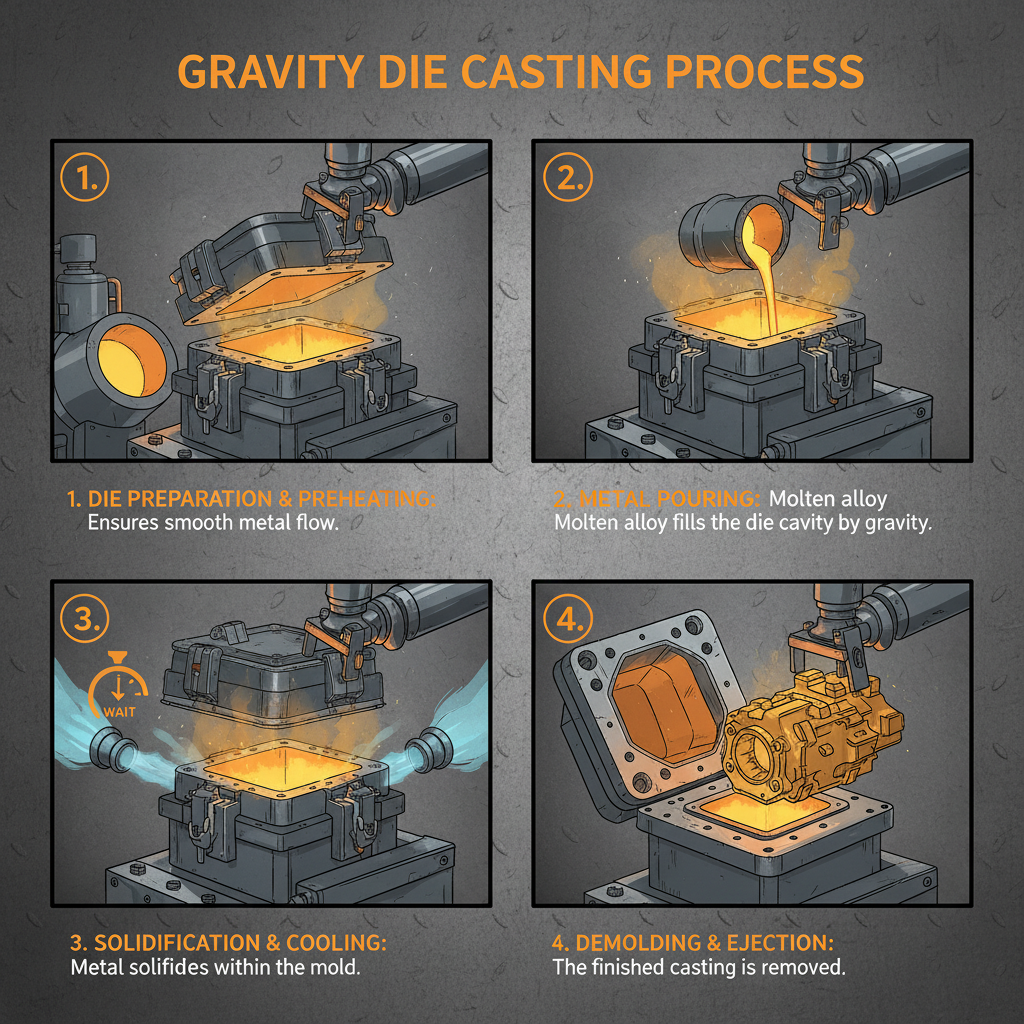
Gravity die casting is a simpler, more cost-effective method, utilizing gravity to fill the mold. While offering lower precision than high-pressure methods, it is suitable for producing parts with less demanding tolerances. Squeeze die casting combines aspects of both die casting and forging, providing enhanced strength and reduced porosity.
Comparative Analysis of Casting Techniques
A detailed comparison of different casting techniques reveals trade-offs between cost, precision, mechanical properties, and production volume. High-pressure die casting typically incurs higher tooling costs but yields the fastest cycle times and highest production rates, making it ideal for mass production.
Low-pressure die casting, while slower and more expensive than high-pressure casting, provides superior material properties and is better suited for intricate designs with large sections. Gravity die casting offers the lowest tooling costs but suffers from limited precision and slower cycle times.
Comparison of Types of Pressure Die Casting Performance
Global Applications of Pressure Die Casting
Pressure die casting plays a critical role across a wide range of industries globally. The automotive sector utilizes die-cast components for engine blocks, transmission housings, wheels, and structural parts, benefiting from the process's ability to produce lightweight, high-strength components. In the aerospace industry, die casting is used for producing complex structural parts and housings.
The electronics industry relies heavily on die-cast enclosures for protecting sensitive components, while the consumer goods sector employs the process for creating housings for appliances, tools, and hardware. Furthermore, medical device manufacturers utilize the precision and repeatability of pressure die casting for producing intricate instruments and housings.
Advantages and Future Trends
The advantages of pressure die casting are numerous, including high production rates, excellent dimensional accuracy, and the ability to produce complex geometries. Furthermore, the process is versatile, accommodating a wide range of metal alloys and part sizes. Its cost-effectiveness, particularly for large production runs, makes it an attractive manufacturing option.
Future trends in pressure die casting point towards increased automation, integration of artificial intelligence for process optimization, and the adoption of sustainable materials and manufacturing practices. Research is focusing on reducing energy consumption, minimizing waste, and developing new alloys with enhanced performance characteristics.
The increasing demand for electric vehicles is driving innovation in die casting, particularly in the production of battery housings and structural components. The development of multi-material die casting, combining different alloys in a single part, is also gaining traction, offering the potential for further weight reduction and performance enhancement.
Challenges and Emerging Solutions
Despite its numerous advantages, pressure die casting faces challenges such as high tooling costs, porosity formation, and the need for efficient cooling systems. Porosity, in particular, can compromise the mechanical properties of castings, necessitating careful process control and the implementation of techniques like vacuum die casting.
Emerging solutions include the use of advanced simulation software to optimize mold design and process parameters, the development of innovative cooling strategies to improve thermal efficiency, and the adoption of additive manufacturing for creating complex mold inserts. Furthermore, the implementation of Industry 4.0 technologies, such as predictive maintenance and real-time monitoring, is enhancing process control and reducing downtime.
Addressing the environmental impact of die casting is also a priority. Research into the use of recycled alloys and the development of more energy-efficient processes are crucial for promoting sustainable manufacturing practices. The push for 'green' die casting solutions is a key driver of innovation in the industry.
Summary of Solutions for Challenges in Pressure Die Casting
| Challenge |
Impact on Quality |
Potential Solution |
Implementation Cost |
| High Tooling Costs |
Limits economic viability for small runs |
Additive Manufacturing for inserts |
Medium |
| Porosity Formation |
Reduces mechanical strength |
Vacuum Die Casting |
High |
| Inefficient Cooling |
Extends cycle times |
Conformal Cooling Channels |
Medium |
| Process Variability |
Inconsistent part quality |
AI-Powered Process Control |
High |
| Material Waste |
Environmental impact |
Recycled Alloy Usage |
Low |
| Energy Consumption |
High operational costs |
Energy-Efficient Machines |
High |
FAQS
High-pressure die casting utilizes significantly higher injection pressures, leading to faster cycle times and finer detail. It's best for high-volume production. Low-pressure die casting employs lower pressure, resulting in improved metal fluidity and reduced porosity, suitable for larger, complex parts with stringent mechanical property requirements. Tooling costs are generally higher for high-pressure systems.
Porosity refers to voids within the casting, typically caused by trapped gas. These voids reduce the part’s strength, ductility, and fatigue resistance. Techniques like vacuum die casting and optimized gating systems are employed to minimize porosity. Careful control of metal temperature and injection parameters also plays a crucial role in preventing defect formation.
Aluminum alloys are the most frequently used material due to their excellent castability, strength-to-weight ratio, and corrosion resistance. Zinc alloys are popular for their high strength and dimensional stability. Magnesium alloys offer exceptional lightweight properties, and copper alloys provide superior electrical conductivity. The selection depends on the specific application requirements.
Tooling lead times can vary significantly, typically ranging from 4 to 12 weeks depending on the complexity of the part and the toolmaker's capacity. Complex designs with intricate features will require longer lead times. Early communication with the toolmaker and providing detailed design specifications are crucial for minimizing delays.
Optimizing part design for manufacturability, simplifying geometry, and minimizing wall thickness variations can reduce tooling costs. Selecting the appropriate alloy and process, streamlining the supply chain, and increasing production volume can also lead to cost savings. Consider design for die casting (DFDC) principles early in the design process.
Pressure die casting can have environmental impacts related to energy consumption, material waste, and emissions. Utilizing recycled alloys, improving energy efficiency through optimized processes, and implementing closed-loop cooling systems can mitigate these impacts. Adhering to environmental regulations and pursuing sustainable manufacturing practices are crucial.
Conclusion
In conclusion, understanding the diverse types of pressure die casting is essential for engineers, manufacturers, and designers seeking efficient, cost-effective, and high-quality component production. From high-pressure casting for high-volume applications to low-pressure methods for intricate designs, each technique offers a unique set of advantages. Mastering these nuances empowers informed decision-making and optimal product performance.
Looking ahead, the future of pressure die casting is poised for innovation, driven by advancements in automation, materials science, and sustainability. Embracing these developments will be critical for remaining competitive in a rapidly evolving manufacturing landscape. For further information and to explore your specific needs, visit our website at www.hairunsourcing.com.