In the modern industrial landscape, aluminum cast parts have emerged as the cornerstone of lightweighting and structural efficiency. From the intricate components of aerospace engines to the robust housings of consumer electronics, the ability to mold aluminum into precise, complex shapes allows engineers to reduce overall weight without compromising the mechanical integrity of the final product.
The global demand for these components is driven by a relentless pursuit of energy efficiency and sustainable manufacturing. As industries transition toward electric vehicles and green energy infrastructure, the versatility of aluminum—specifically its high strength-to-weight ratio and excellent corrosion resistance—makes it an indispensable material for those looking to optimize performance while reducing carbon footprints.
Understanding the nuances of producing high-quality aluminum cast parts is not merely a technical requirement but a commercial advantage. By leveraging advanced casting techniques such as die casting and precision casting, manufacturers can achieve tight tolerances and superior surface finishes, ensuring that every part meets the rigorous standards of international ISO certifications and specific industry benchmarks.
Global Industry Context of Aluminum Cast Parts
On a global scale, the production of aluminum cast parts is intrinsically linked to the growth of the automotive and aerospace sectors. According to industry data aligned with ISO standards, the shift toward "lightweighting" has seen aluminum replace heavier steel components in over 40% of new chassis designs. This transition is not just about weight; it is about the thermodynamics of efficiency, where every kilogram saved translates directly into lower fuel consumption or extended battery range for EVs.
However, the industry faces a critical challenge: balancing the speed of mass production with the precision of high-end engineering. Many manufacturers struggle with porosity and shrinkage defects that can lead to structural failure in mission-critical applications. This creates a significant demand for advanced casting methodologies that can guarantee consistency across millions of units while maintaining a low environmental impact.
Defining the Essence of Aluminum Cast Parts
In simple terms, aluminum cast parts are components created by pouring molten aluminum alloy into a mold, where it solidifies into a predetermined shape. Unlike machining from a solid block, casting allows for the creation of complex internal geometries and organic shapes that would be nearly impossible or prohibitively expensive to mill. This process is the bridge between raw material science and functional industrial design.
Beyond the technical definition, these parts serve a vital role in modern humanitarian and infrastructure needs. For instance, in the construction of rapid-deployment medical facilities or sustainable housing, aluminum's ease of casting allows for the creation of modular connectors and structural brackets that are lightweight enough for air transport but strong enough to ensure safety in disaster-prone areas.
The connection to modern industry lies in the material's inherent versatility. By adjusting the alloy composition—adding elements like silicon or magnesium—manufacturers can tailor the aluminum cast parts to be either incredibly hard for wear-resistance or highly ductile for impact absorption, making them suitable for everything from engine blocks to luxury watch casings.
Key Factors Governing Component Quality
Durability is the foremost metric for any high-performance aluminum cast parts. This is achieved through precise thermal management during the cooling phase, which prevents internal stresses and ensures a uniform grain structure. When durability is prioritized, the resulting parts can withstand extreme temperature fluctuations and mechanical loads without cracking.
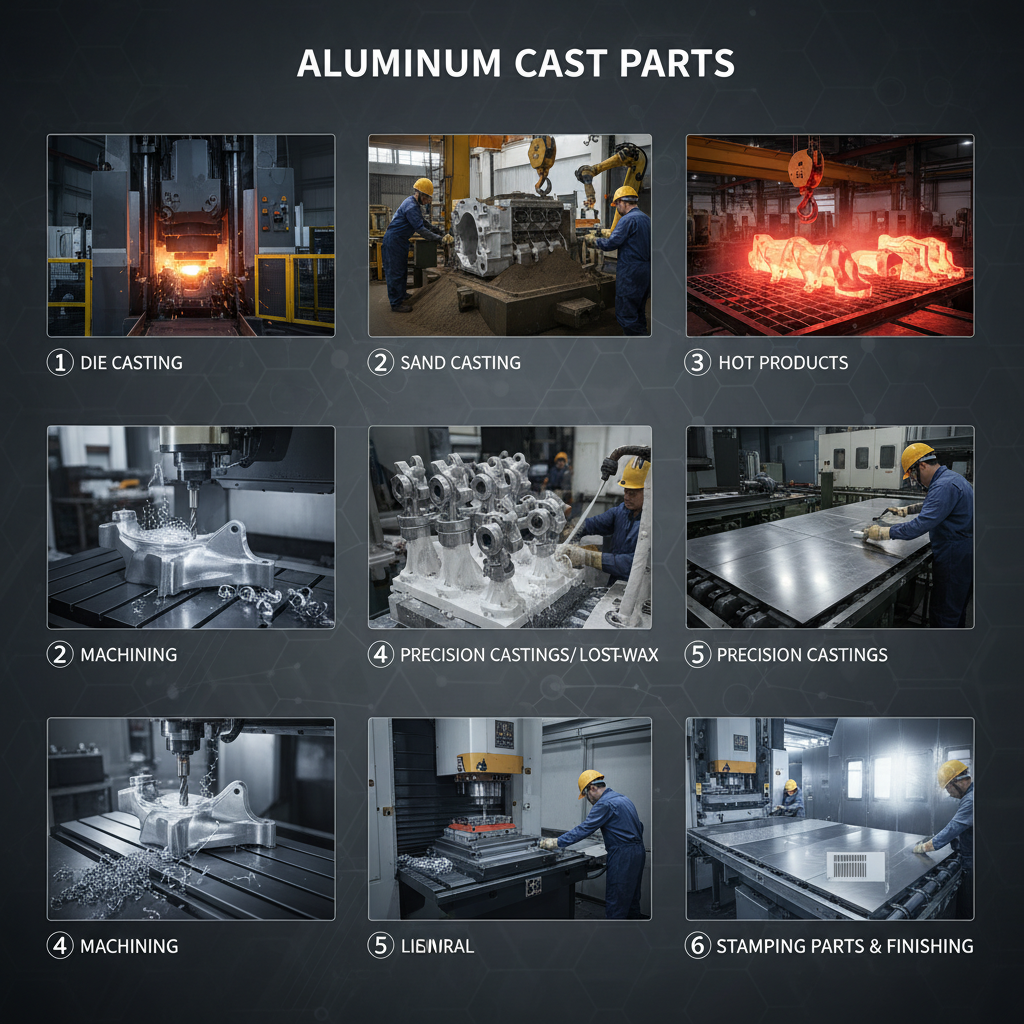
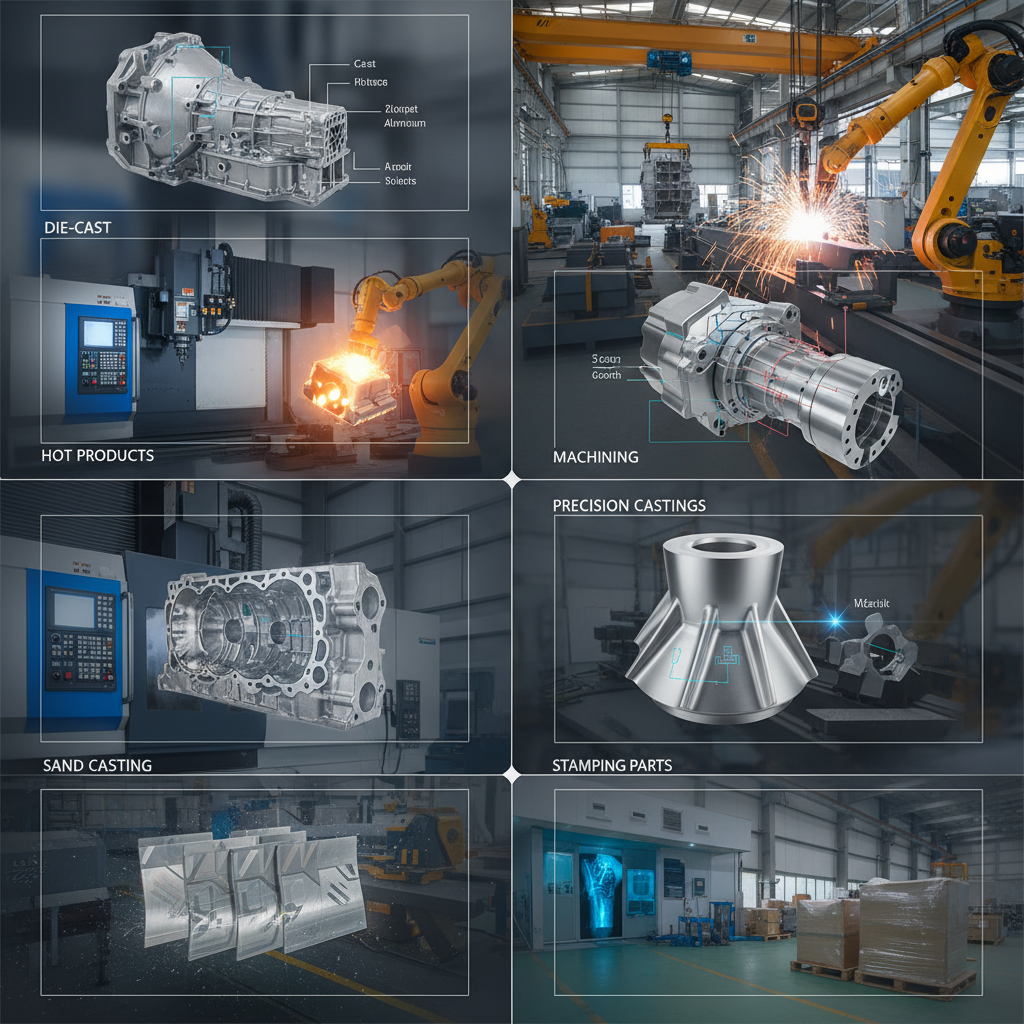
Scalability and cost-efficiency are driven by the choice of casting method. High-pressure die casting is ideal for massive volumes of small, intricate parts, whereas sand casting provides a cost-effective route for large-scale prototypes or heavy industrial components. The ability to scale from a single prototype to a million-unit run is what makes aluminum the preferred choice for global supply chains.
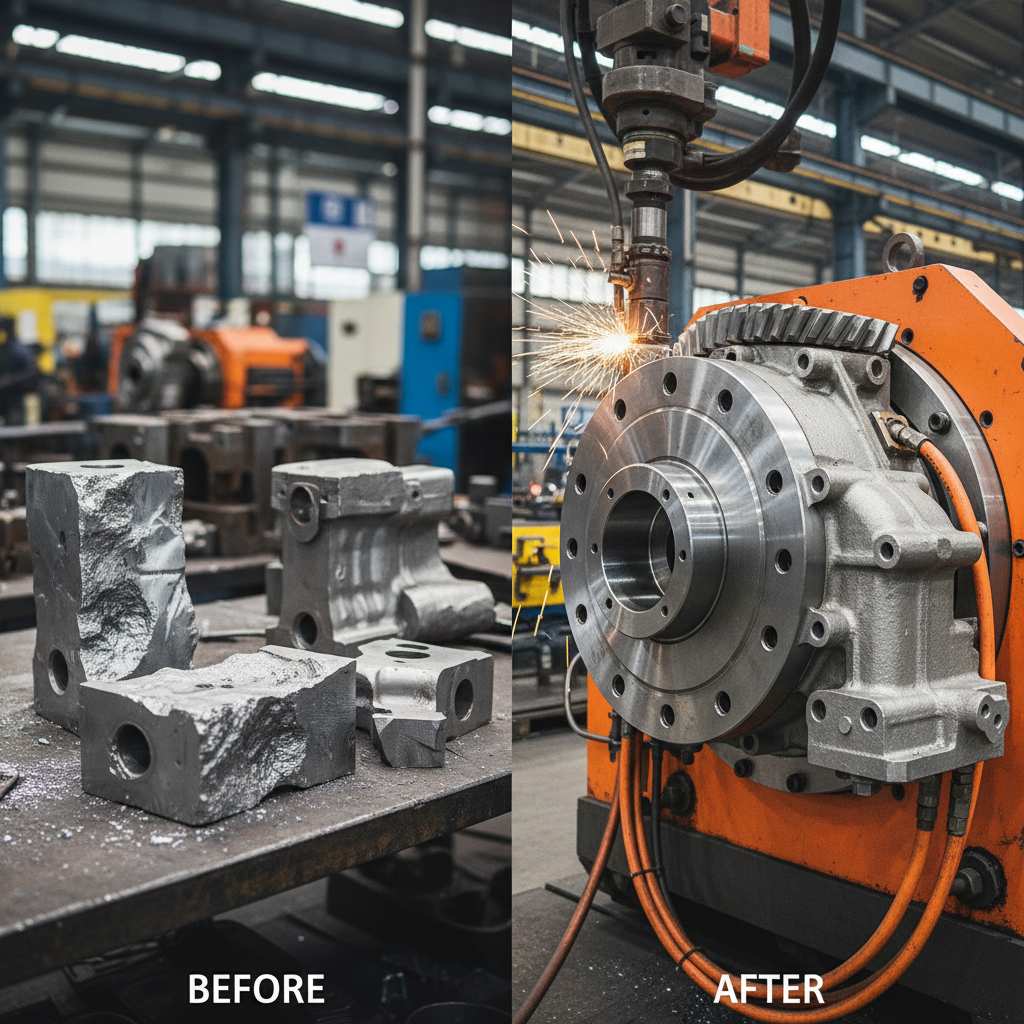
Precision and surface finish are the final critical factors. Through secondary operations like CNC machining, the raw aluminum cast parts are refined to micron-level tolerances. This synergy between casting and machining ensures that the components fit perfectly into complex assemblies, reducing the need for oversized fasteners and further contributing to the overall weight reduction of the system.
Global Applications and Use Cases
In the automotive industry, aluminum cast parts are utilized in everything from transmission housings to engine cylinder heads. In Europe and North America, where emissions regulations are stringent, the adoption of aluminum components is mandatory to meet fleet-wide average fuel economy standards. These parts provide the necessary thermal conductivity to keep engines cool while remaining light enough to improve vehicle agility.
Outside of transport, we see these components in remote industrial zones and energy sectors. For example, in the deployment of offshore wind turbines, aluminum cast housings protect sensitive electronic controllers from saltwater corrosion. Similarly, in post-disaster relief operations, lightweight aluminum cast connectors are used to assemble modular bridges and shelters quickly, providing immediate stability and dignity to displaced populations.
Performance Comparison of Aluminum Casting Methods
Long-Term Value and Advantages
The long-term value of investing in high-quality aluminum cast parts extends far beyond the initial purchase price. From a logical perspective, the corrosion resistance of aluminum eliminates the need for expensive anti-rust coatings and frequent replacements, significantly lowering the total cost of ownership (TCO) for industrial machinery and consumer products.
Emotionally and ethically, the move toward aluminum represents a commitment to innovation and trust. In safety-critical applications, such as medical device housings or aerospace brackets, the reliability of a precision-cast part provides peace of mind. Furthermore, because aluminum is infinitely recyclable without losing its properties, these parts contribute to a circular economy, aligning corporate goals with global sustainability targets.
Future Trends and Innovations
The future of aluminum cast parts is being reshaped by the digital transformation of the foundry. "Smart Casting" now incorporates AI-driven simulation software that predicts shrinkage and porosity before a single drop of metal is poured. This reduces waste and accelerates the R&D cycle, allowing for the creation of "generative designs" that optimize material placement for maximum strength and minimum weight.
Green energy is another massive driver. The industry is shifting toward the use of secondary (recycled) aluminum, which requires only 5% of the energy needed to produce primary aluminum from bauxite. This transition is supported by new policies in the EU and Asia that incentivize "green aluminum" certifications, pushing manufacturers to adopt low-carbon smelting processes.
Automation and robotics are also integrating deeply into the finishing process. Automated deburring and robotic polishing ensure that aluminum cast parts achieve an aesthetic and functional perfection that was previously only possible through laborious manual work. This marriage of metallurgy and robotics is setting a new standard for precision in the 21st century.
Challenges and Strategic Solutions
One of the primary challenges in producing aluminum cast parts is the management of gas porosity. When molten aluminum reacts with hydrogen in the atmosphere, small bubbles can form, creating weak points in the structure. To overcome this, expert foundries employ vacuum casting and degassing treatments using inert gases, ensuring a dense, void-free internal structure.
Another hurdle is the trade-off between complexity and mold wear, particularly in high-pressure die casting. The abrasive nature of certain alloys can erode molds over time, leading to dimensional drift. The solution lies in the application of advanced PVD (Physical Vapor Deposition) coatings on the molds, which extend tool life and maintain tight tolerances over longer production runs.
Finally, supply chain volatility for specific alloying elements like magnesium can affect production costs. Strategic manufacturers are overcoming this by diversifying their sourcing and investing in "alloy optimization" research, finding alternative chemistry combinations that provide the same mechanical properties while utilizing more abundant materials.
Comparative Analysis of Aluminum Casting Solutions and Their Impact
| Casting Method |
Precision Level |
Production Speed |
Cost Efficiency |
| High Pressure Die Casting |
High |
Very Fast |
Excellent (High Vol) |
| Sand Casting |
Low to Medium |
Slow |
Excellent (Low Vol) |
| Investment Casting |
Very High |
Medium |
Moderate |
| Gravity Die Casting |
Medium |
Medium |
Good |
| Centrifugal Casting |
Medium |
Fast |
Good |
| Vacuum Casting |
High |
Slow |
Low (Prototyping) |
FAQS
Casting allows for "near-net-shape" production, meaning the part comes out of the mold very close to its final form. Forging requires significant material removal via machining to achieve complex internal voids or thin-walled structures, which increases waste and cost. Aluminum cast parts provide the design freedom to integrate multiple functions into a single component, reducing assembly time and weight.
Integrity is ensured through a combination of metallurgical control and rigorous testing. This includes using X-ray or CT scanning to detect internal porosity, ultrasonic testing for wall thickness verification, and pressure testing for leak-proof components. Furthermore, applying T6 heat treatment can significantly enhance the tensile strength and hardness of the cast part.
Yes, primarily due to recyclability. While plastics often end up in landfills or require complex chemical recycling, aluminum is infinitely recyclable. Recycled aluminum uses roughly 95% less energy than producing new aluminum. Additionally, the longevity and durability of aluminum often mean a longer product lifecycle, reducing the overall frequency of replacement and waste.
Lead times vary by method. Sand casting can provide prototypes in a few weeks because it doesn't require expensive permanent tooling. In contrast, high-pressure die casting requires the design and fabrication of steel molds, which can take 8 to 12 weeks. However, once the tooling is ready, the per-unit production time is reduced to seconds, making it the fastest method for mass production.
Absolutely. Aluminum is an ideal substrate for surface treatments. Anodizing creates a hard, protective oxide layer that can be dyed in various colors and provides exceptional corrosion resistance. Powder coating and liquid painting are also common, providing a high-gloss or matte finish that protects the part from environmental wear while meeting strict brand aesthetic requirements.
The choice depends on volume and precision. Choose die casting if you need thousands of parts with high precision and a smooth finish. Choose sand casting if you are producing a few large parts, are in the prototyping phase, or need a material that is difficult to die-cast. A professional consultant can analyze your CAD files to determine the most cost-effective route based on your expected annual volume.
Conclusion
In summary, aluminum cast parts represent the perfect intersection of material science and industrial pragmatism. By balancing weight, strength, and manufacturability, these components enable the next generation of automotive, aerospace, and electronic innovations. Whether through the efficiency of die casting or the flexibility of sand casting, the ability to produce high-precision aluminum components is a critical driver of global industrial competitiveness and sustainable development.
Looking forward, the integration of AI-driven design and green metallurgy will only enhance the value proposition of aluminum casting. For companies aiming to optimize their product performance while adhering to strict environmental standards, partnering with a foundry that prioritizes E-E-A-T principles—Experience, Expertise, Authoritativeness, and Trustworthiness—is essential. To explore how high-precision aluminum solutions can transform your product line, visit our website: www.hairunsourcing.com.